How Adult Day Care Transportation Works
Many adult day centers offer rides to and from the program. For families, that can make adult day care much easier to use and give a caregiver a real daytime break.
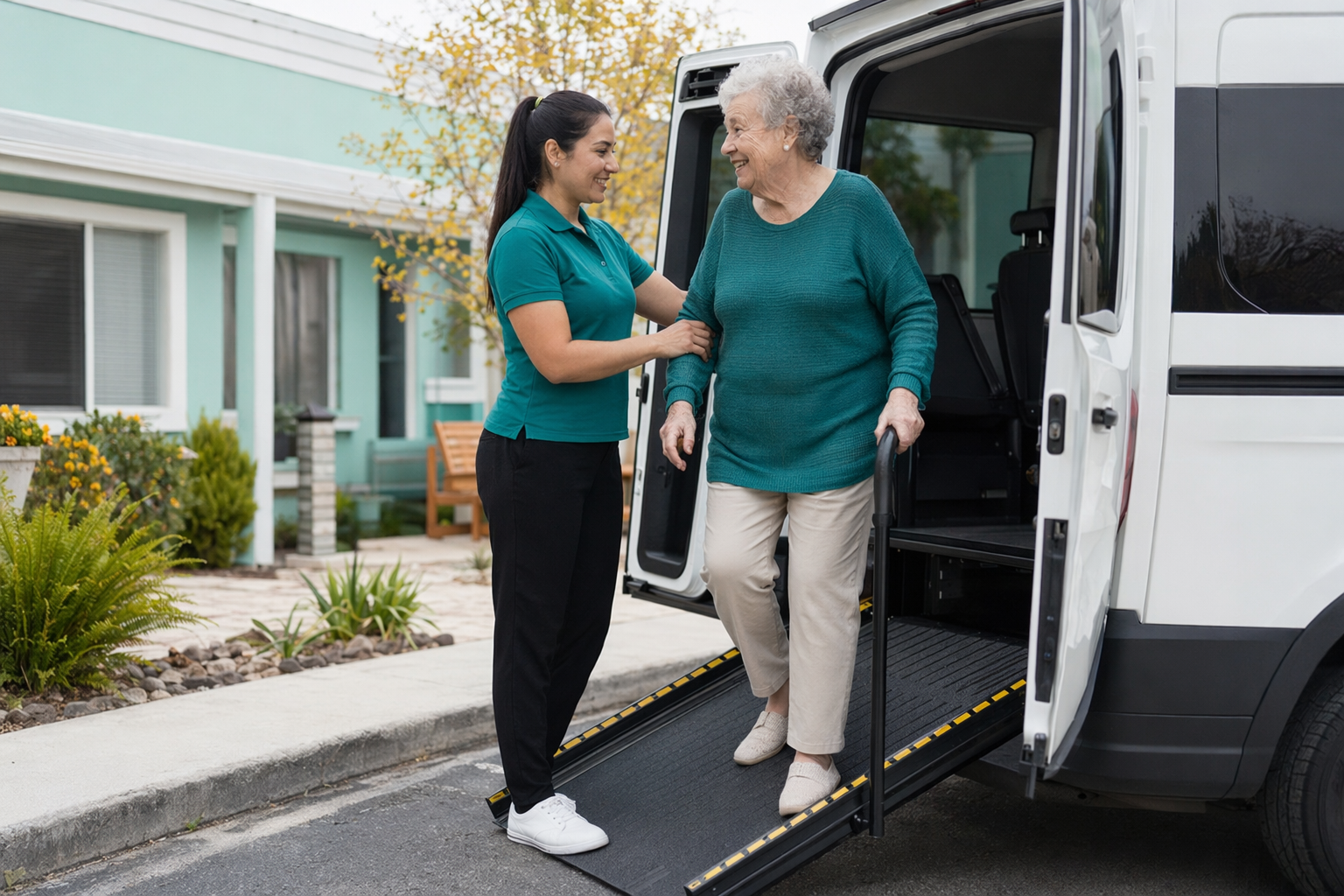
How transportation usually works
Adult day care is for older or disabled adults who live at home and go to a daytime program for support, activity, supervision, meals, and sometimes health-related services. Many centers include transportation or help arrange it as part of the day.
In most areas, rides work in a simple way:
- The center sets a pickup window in the morning and a drop-off window in the afternoon.
- A van, small bus, or contracted driver picks up several participants on one route.
- The rider is brought to the center, attends the program during the day, then is taken home.
Many programs run about 7am to 6pm, but transportation times are often earlier or later than the core program hours because drivers are making multiple stops. A family may need to be ready a little before the planned pickup time.
Some centers provide their own vehicles. Others work with a local transportation company or community transit service. Either way, ask for clear details in writing before enrolling.
If you are still comparing program types, it may help to review the main kinds of adult day programs. Transportation can look a little different for social day programs, adult day health programs, and dementia day care.
What kinds of rides and accessibility features to expect
Transportation is not the same at every center. Some programs serve mostly walkers. Others are set up for riders who use wheelchairs, need extra help getting on and off the vehicle, or do better in a quiet and structured setting.
Common accessibility and comfort features may include:
- Wheelchair-accessible vans with lifts or ramps
- Seat belts or wheelchair securement systems
- Drivers or ride staff trained in safe boarding and unloading
- Door-to-door or curb-to-curb service, depending on the program
- Help carrying a small bag, coat, or walker
- A familiar route and routine for people who get anxious with change
For a person with memory loss, transportation can be just as important as the center itself. A long, confusing ride may be hard on them, even if the program is good. A secure and calm setting matters both in the center and during arrival and departure. If your family member may need this kind of support, compare options that focus on dementia day care.
Ask exactly what "assistance" means. Some programs help a rider from the vehicle to the front door. Others require a family member or aide to be present at pickup and drop-off. Do not assume staff will enter the home, help with transfers inside the house, or wait a long time if no one answers the door.
Also ask whether transportation is available every day or only on certain days and in certain zip codes. A center may be excellent but have a limited service area.

What transportation may cost
Transportation may be included in the daily rate, added as a separate fee, or arranged through another service. There is no single national price for rides.
Typical adult day care rates often look like this:
- Social adult day programs: about $60-$100/day
- Adult day health programs: about $90-$160/day
- Dementia day care: about $80-$150/day
- National average: often around $90-$100/day
Transportation may be built into that amount, but not always. Some programs charge a daily ride fee, a weekly transportation fee, or a higher rate for wheelchair-accessible trips or longer routes. Real cost depends on the program, the level of care, the state, distance, and any Medicaid or other benefits.
In many states, Medicaid HCBS waivers, the VA, or long-term-care insurance may help pay for adult day care or transportation. Coverage rules are different by state and plan. It is best to treat this as general information only and confirm eligibility directly with the program and the benefit source. You can read more about typical pricing on our costs page and general payment information in this Medicaid guide.
Before you agree to anything, ask for a written breakdown that shows:
- the day rate
- whether rides are included
- any separate transportation fee
- extra charges for missed rides, late cancellations, or extended hours
- whether the price changes if your family member attends fewer or more days per week
Safety questions to ask before you enroll
Transportation can be convenient, but families should still check it carefully. BrightenDay is a free matching and information service, not a center or care provider, so we always recommend that you visit in person, choose a licensed or certified adult day center, verify the license or certification yourself, and confirm services, cost, and safety in writing.
Use this checklist when you talk with a center:
- Is the center licensed or certified in this state, and how can I verify it?
- Do you provide transportation directly, or use a transportation partner?
- Are vehicles insured and maintained on a regular schedule?
- Are drivers trained to help older or disabled adults board safely?
- Are staff trained for riders with memory loss, confusion, or mobility needs?
- How are wheelchairs secured?
- Is there a staff member besides the driver on routes that need more support?
- What happens if the rider is not ready on time?
- What happens if no one is home at drop-off?
- Who calls the family if the vehicle is delayed?
- How long is the typical ride each way?
- What is your bad weather policy?
- Can I see the vehicle and watch pickup or drop-off once before we start?
A short, dependable ride is often better than a long route, especially for someone who tires easily or becomes upset by changes. A lower price is not always the best fit if the trip is hard on your loved one.
How to compare transportation options step by step
If you are helping an older parent, spouse, or disabled adult stay at home, transportation can be the detail that makes adult day care truly workable. These steps can help.
- Start with the person's daily routine. Think about when they wake up, eat, rest, and have the most energy. A 7:30am pickup may work well for one person and be too early for another.
- Ask about ride time, not just distance. Ten miles can still mean a long route with many stops.
- Check the level of help needed. Can the person step into a van alone? Do they use a walker or wheelchair? Do they need a hand from the door to the vehicle? Keep this at a general level. You do not need to give detailed medical history to ask these questions.
- Visit the center. Watch how staff greet riders. Are they calm, respectful, and organized?
- Request the transportation policy in writing. This should cover pickup windows, late arrivals, weather delays, and who must be present at home.
- Try a small schedule first. If the center allows it, starting with 1 or 2 days a week can help the family see whether the ride is a good fit.
For many caregivers, reliable transportation is what turns an idea into actual respite. Getting a few hours to work, rest, go to appointments, or simply breathe does not mean you are failing your loved one. It means you are building support around them and around yourself. If respite is the main reason you are looking, this guide on caregiver respite may help.
If you want help comparing programs in your area, you can get matched with licensed or certified adult day centers that may fit your location and general needs.
Ask each center if rides are included, how long the trip is, whether the vehicle is accessible, and what safety rules they use. Choose a licensed or certified adult day center, verify that yourself, visit in person, and get the transportation details and total cost in writing before you sign up.