Getting to and From a Day Program: Your Options
Transportation can make or break a good adult day care plan. The good news is that many adult day centers offer rides, and there are other ways to get your loved one there safely and on time.
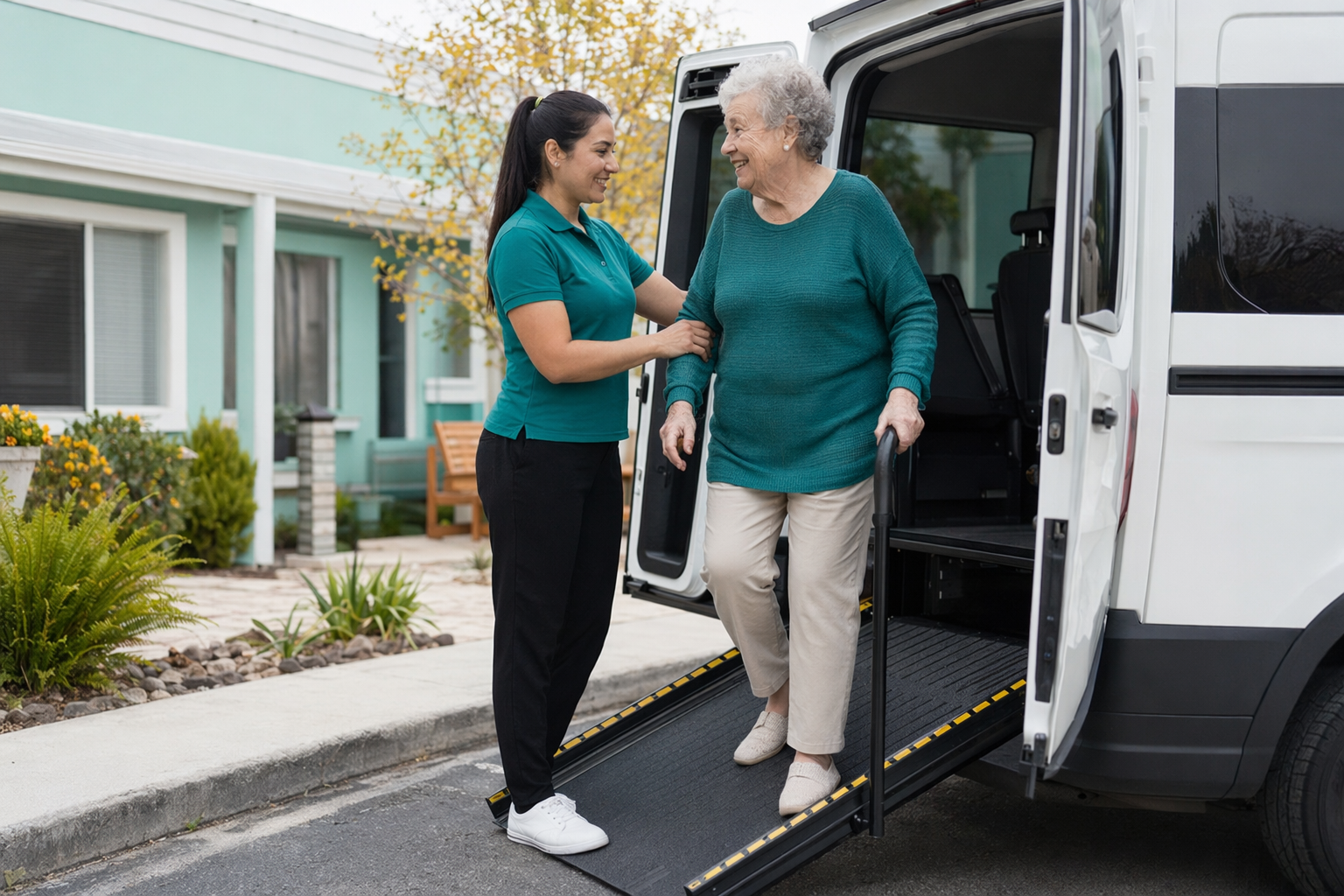
Why transportation matters
For many families, the hardest part is not choosing the program. It is figuring out how your loved one will get there and back every day.
Adult day care is for older or disabled adults who live at home and attend a daytime program. Some programs focus on social time and supervision. Some provide nursing, therapy, health monitoring, and personal care. Some are designed for dementia and memory loss in a secure setting. Many centers offer meals and transportation, but not all do, and the details can vary a lot by location.
A good ride plan helps with more than convenience. It can mean:
- less stress in the morning
- fewer missed days
- a safer handoff between home and the program
- a real daytime break for the family caregiver
If you are just starting to compare options, it helps to first understand the different programs and then ask each center exactly how transportation works.
Needing transportation support is common. It does not mean you are failing your loved one. It means you are building a routine that can work in real life.
Common ways families handle rides
There is no one best transportation setup. The right choice depends on the person's mobility, memory, behavior needs, your work schedule, and what programs exist near you.
Here are the most common options:
1. Center transportation
Many adult day centers have vans or small buses. This is often the simplest option. Some vehicles are wheelchair-accessible. Some programs have aides or drivers trained to help riders get on and off safely. Ask whether the ride is door-to-door, curb-to-curb, or requires a family member to be present.
2. Family drop-off and pick-up
Some families prefer to drive their loved one themselves, especially at first. This can help with trust, routines, and communication with staff. It may also be the best choice if your loved one gets anxious in a group ride or needs a slower handoff.
3. Friend, neighbor, or community volunteer help
In some areas, a trusted friend, faith group, senior service, or local nonprofit may help with rides. This can be useful for one or two days a week, or as backup when the main plan falls through.
4. Public or paratransit services
Some cities and counties offer senior transportation or disability paratransit. These services may cost less than private transportation, but they often need advance scheduling and may have wider pickup windows.
5. Private ride services or medical transport companies
Some families use a private driver, wheelchair van, or non-emergency transport company. This may work when the center does not provide rides or the home is outside the center's route.
Not every option fits every person. Someone with dementia may do best with a secure, predictable ride routine and staff who understand confusion, wandering risk, or agitation. Someone with major mobility needs may need a lift-equipped vehicle and extra boarding help. When you compare programs, ask whether their transportation matches the person's daily needs, not just whether a ride exists.
If you are comparing memory care options, see dementia day care.

Questions to ask before you count on transportation
A ride can sound good on paper and still fail in daily life. Ask clear questions before you enroll. It is fine to write the answers down and compare centers side by side.
Ask the center:
- Do you provide transportation every day, or only on certain days?
- What towns or ZIP codes are in your pickup area?
- What are the usual pickup and drop-off times? Many programs run roughly 7am to 6pm, but van times may start earlier or end later.
- Is the ride included in the daily rate, or charged separately?
- Is the vehicle wheelchair-accessible?
- Can staff help with walkers, transfers, or getting to the door?
- Is it door-to-door or curb-to-curb?
- Does an adult need to be home at pickup or drop-off?
- How long is the typical ride? A long route can be tiring.
- How many riders are usually on the van?
- How do you handle late pickups, weather, or vehicle problems?
- What training do drivers and ride staff have?
- If a participant has memory loss, how do you keep the handoff safe?
Also ask yourself:
- Can my loved one tolerate waiting for pickup?
- Will an early morning ride be too hard?
- Is group transportation calming, or upsetting?
- If the center ride is unavailable one day, what is my backup plan?
Always choose a licensed or certified adult day center when required in your state, verify the license or certification yourself, visit in person, and confirm transportation details, services, costs, and safety steps in writing before enrolling. Our guide to how to choose an adult day center can help you compare options.
What transportation may cost
Transportation costs are not the same everywhere. Some programs include rides in the daily fee. Others charge a separate transportation fee, a monthly fee, or a per-ride fee.
For the program itself, typical adult day care ranges are often around:
- Social adult day programs: about $60-$100 per day
- Adult day health programs: about $90-$160 per day
- Dementia day care programs: about $80-$150 per day
- National average: roughly $90-$100 per day
Those are examples, not quotes or guarantees. Real cost depends on the program, the level of care, the state, and any Medicaid or other benefits.
Transportation can change the total. A center may:
- include local transportation in the day rate
- include only certain days or neighborhoods
- charge extra for wheelchair-accessible transport
- limit transportation to full-day participants
Payment help may be available in some states through Medicaid HCBS waivers, the VA, or long-term-care insurance. Coverage rules vary, and not every program accepts every payment source. It is best to ask both the program and the payer what may be covered. Learn more at does Medicaid pay for adult day care and costs.
BrightenDay does not quote rates, determine eligibility, or promise coverage. We share general information and help families get matched with programs to contact.
A simple plan for choosing the safest, easiest ride
Use this short process to avoid surprises:
- Start with the person's real daily needs. Think about mobility, memory, behavior, stamina, and whether they need a calm routine.
- Ask about transportation early. Do not wait until after you love the program.
- Get the route details. Ask for pickup window, ride length, and what happens if no one answers the door.
- Visit in person. If possible, see where vehicles load and unload. Watch whether the process looks organized and respectful.
- Confirm everything in writing. Include fees, days, service area, accessibility, and who must be present at home.
- Set a backup plan. Weather, staff shortages, and vehicle problems happen.
- Try the first week carefully. Notice how tired, calm, or confused your loved one is after the ride.
The goal is not perfection. The goal is a routine that your loved one can manage and that gives you reliable daytime help. That break matters. If you want help finding licensed or certified options to contact, you can get matched.
What to do next
If transportation is one of the main reasons you have delayed adult day care, you are not alone. Many families can manage the care part in theory, but the ride part is what makes the decision feel hard.
Take the next step in this order:
- make a short list of programs near home
- ask each one about transportation before you schedule a tour
- visit the centers you like best
- verify license or certification yourself
- compare cost, schedule, accessibility, and safety in writing
A good transportation plan can turn adult day care from "maybe someday" into something that truly works each week. It can also protect caregiver energy and make respite more real. If you want support thinking through the family side of daytime care, read caregiver respite explained.
Ask each adult day center how rides work before you enroll. Check the pickup area, times, accessibility, total cost, and safety steps. Visit in person, verify the center's license or certification yourself, and get the details in writing so you can choose the option that works best for your family.